
Why Distribution and Trust Define Fintech Winners in Africa
Every founder believes their product is different. They highlight the user interface, the speed, the compliance features, the innovation. Yet, in Africa’s fintech market, the best product rarely wins.

The overlooked truth in African fintech
Every founder believes their product is different. They highlight the user interface, speed, compliance features, and innovation. Yet, in Africa’s fintech market, the best product rarely wins.
The companies that scale are not those with the most features. They are the ones who secure distribution and build trust.
I hear this recurring theme from founders, operators, and investors: distribution is the first battle, trust is the second. Product quality matters, but only after you have earned both.
The first 100 users’ problem
Every fintech founder eventually confronts the same obstacle: getting the first 100 users.
No amount of slide decks or growth projections can substitute for it. Campaigns or discounts do not attract the first 100 users. They come through your personal networks, friends, family, and the goodwill of early adopters willing to take risks. I was on a Twitter Space recently with Timon's co-founders, and they shared how they got their first 100 users.
For Timon, this meant using WhatsApp stories to show the product in action, sending them across groups, and persuading colleagues to try it. It was not glamorous, but it worked. Those first 100 became advocates, leading to the next 1,000, which, step by step, were distribution compounds.
The first 100 users define whether you have momentum or not. Without them, you have a product, not a business.
Why distribution is the real moat
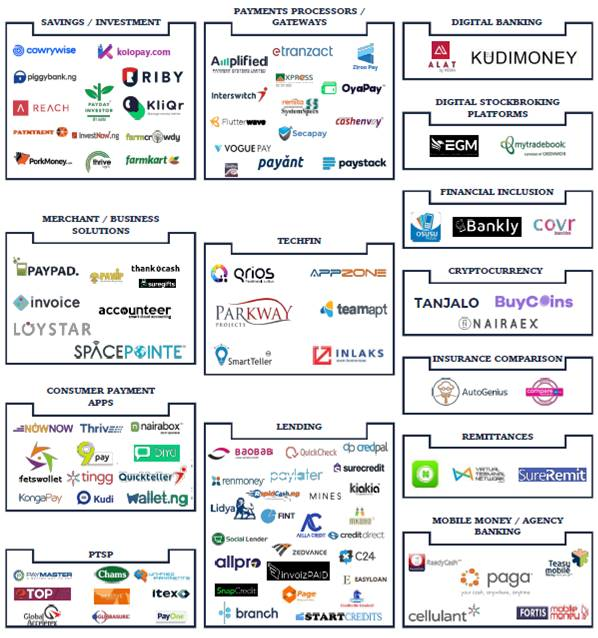
Attention is scarce in an overcrowded fintech market. Every week, new remittance products, wallets, and payment apps launch. Customers do not lack choice; what they lack is clarity.
The winners are the companies that break through the noise with a clear, simple proposition and consistently get it in front of users. Distribution is not an afterthought. It is the moat.
This is why founders spend disproportionate energy on building partnerships, embedding into existing customer behaviours, and amplifying word-of-mouth. A good product hidden in a corner of the internet is irrelevant. A decent product with wide distribution dominates.
Trust as non-negotiable
Trust is more complex to earn than distribution, and easier to lose.
African consumers have been burned before by poorly run fintechs, hidden fees, or services that vanished after two years. The result is a natural scepticism.
That is why transparency is more valuable than features. Companies that show live FX rates instead of adding hidden margins build credibility. Companies that handle security breaches responsibly retain users. Trust is not just compliance. It is the perception that a company will be around tomorrow.
This is why scaling without operational discipline is dangerous. Adding features faster than you can secure uptime, compliance, and customer support erodes trust. The companies that win innovate with discipline, not speed for speed’s sake.
How investors validate products
Investors echo the same point. Microtraction’s investment team, on the same X space, shared that they do not just review pitch decks. They go on Twitter and watch how users talk about a product. If customers recommend it, share it, and defend it, that is proof of value.
In other words, user validation is stronger than fundraising announcements. Distribution and trust show up in the way real users talk about you.
Beyond customers, investors look at the founders themselves. Attributes like grit, resourcefulness, and discipline matter more than the original idea. Products may pivot, but the founders’ character does not.
The balance between innovation and discipline
Founders in Africa face constant pressure to add features. Users ask for more. Competitors ship fast. Teams want to build.
But adding too much, too soon, without discipline erodes the one currency you cannot lose: trust.
The strongest operators build a cadence of listening to customers weekly, filtering the noise, and only shipping what strengthens security, usability, and confidence. The discipline to say “not now” is as strategic as launching a new feature.
The bottom line
Africa’s fintech market is not a product race. It is a race for distribution and trust.
The companies that scale are not necessarily those with the most advanced technology. They are the ones whose users spread the word, whose value propositions cut through noise, and whose transparency builds confidence.
The market opportunity is significant, but will not be captured by the product alone. It will be captured by those who treat distribution and trust as core strategies.
If you are planning an African market entry, ask yourself: Are your distribution and trust strategies as strong as your product roadmap? Reply here and let’s discuss.